Hyaluronic Acid Dermal Filler.
Restoration & beautification
The key to successful dermal filler treatment relies on in achieving results that beautifully complement your unique facial characteristics. The goal is to create a blended, seamless appearance; that feels natural and appropriate.
Cheeks
Undereye
Temples
Superficial (Line chasing)
Pre-aricular Marionette line/oral commusure
Nasolabial folds (smile lines)
Jawline
Lips
Chin
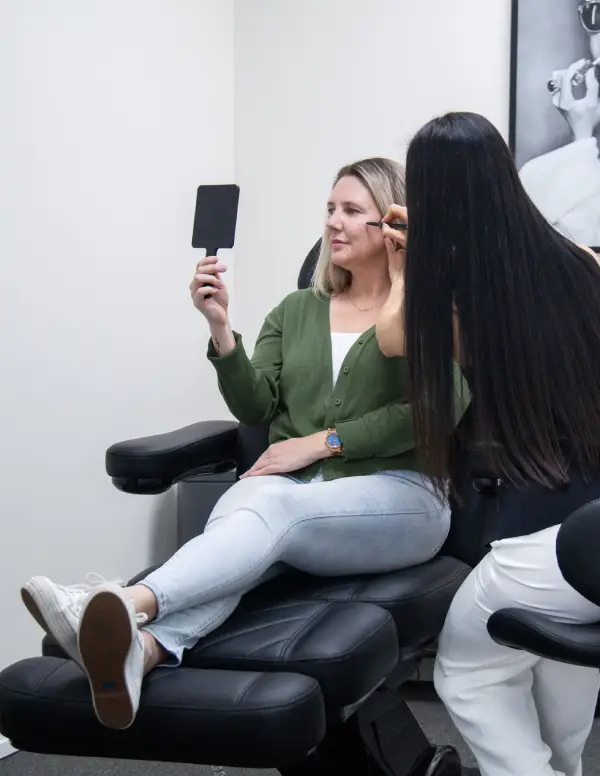
HA dermal fillers work through several key mechanisms:
Volume Restoration:
HA dermal fillers create a scaffold-like effect, placed deep on bone, deep fat pads, or superficial fat pads.
This supports the natural depletion of our fat pads as we age.
HA dermal filler can support our facial shape as natural changes occur through boney reabsorption of our skeleton, ageing ligaments and skin changes.
Biocompatibility:
Being a naturally occurring component of the skin, hyaluronic acid is is most commonly tolerated by the body.
Each filler also has specific rheological properties which influence integration into the tissue as well as their longevity.
Gradual Breakdown:
HA fillers are designed to gradually break down over time through natural metabolic processes. This allows for a subtle, natural-looking transition as the filler diminishes, and many people appreciate the option of touch-ups to maintain their results.
What to Expect During Treatment
Enhancing facial features through fillers is often referred to as “beautification”. This involves refining the shape and structure of features to achieve a more aesthetically pleasing look.
For instance, fillers can enhance the fullness of the lips, and define the cheekbones.
Beautification typically focuses on enhancing one’s overall appearance rather than directly addressing the signs of ageing.
On the other hand, targeting the visible signs of ageing with fillers is known as “restoration”.
As we age, our skin loses elasticity, volume, contour and hydration. Resulting in increased skin laxity/sagging, hollowing, and the formation of wrinkles.
Fillers can effectively address these concerns by replenishing lost volume, smoothing out fine lines, and restoring a youthful glow to the skin.
Beautification and Restoration are concepts that are often rooted in the idea of “golden ratios, which are mathematical proportions that are believed to create beauty and harmony in facial structure.
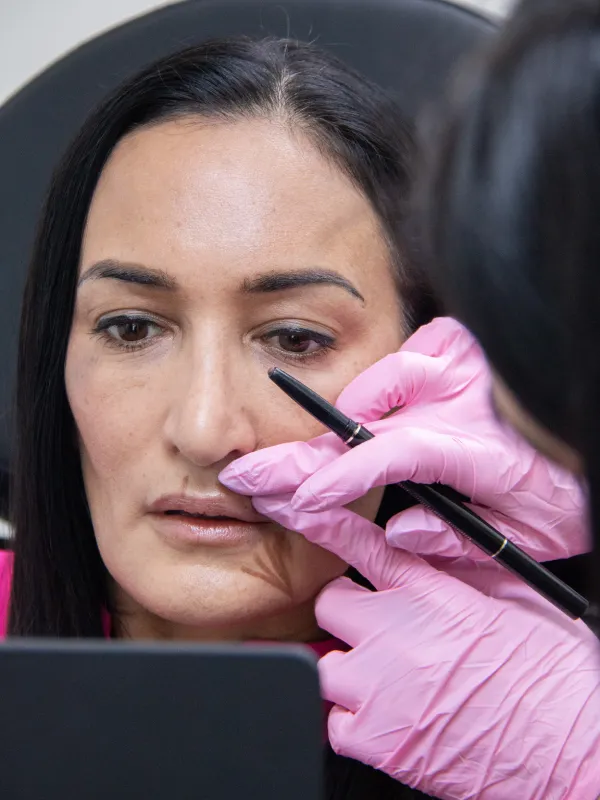
Treament Area's
Achieving the right balance in the cheeks involves understanding the “ogee curve,” characterized by an ‘S’ shape in females, and sharper more defined angles for the masculine.
Providing cheek support can also soften the appearance of nasolabial folds and jowling- bringing harmony between the upper and lower face.
If you’re considering tear trough fillers, Vanessa may recommend starting with cheek or midface fillers, as this can provide support to the under-eye area.
Firstly, lip filler can look natural!
When considering lip filler, your natural lip shape, size, and facial structure will be assessed along with your ideal lip aesthetic.
Lip filler can positively enhance your overall facial aesthetic, giving you a hydrated, and balanced lip from every angle.
Full, well-defined lips are a hallmark of youth. As we age, our upper lip may elongate, and we often lose hydration, volume, and definition. Enhancing your pout might require just a small amount of filler, or several sessions to “build up” lip volume (particularly if you do not naturally have much of an upper lip to begin with).
Rest assured, there are no “duck lip” treatments here. This often happens when the side profile is not considered, when increasing lip volume.
Additionally, the peri-oral area (the tissue around your lips) may also need treatment alongside your lip filler to create a seamless transition.
Please note: If you have lip migration from a previous treatment, Face Time Aesthetics will most often recommend dissolving previous work before more filler is planned.
These are the lines that run downward from the corners of the mouth. Loss of volume in this area can lead to collapse or sagging around the mouth. Filler in the oral commissures can help lift downturned mouth corners.
With age, the corners of the mouth may droop, creating a “sad” or tired expression.
Adding volume in this area helps to provide structural support to the lower face, reducing shadowing and depth of these lines.
Often the chin is one of the most transformational treatments, as it has an effect on dimension, depth, and facial ratio. Especially when combined with jawline filler.
Chin filler may be discussed as part of your lip consultation too; as it is important to assess your surrounding tissue to ensure treatments blend and respect your natural features.
Furthermore, assessment of your mentalis (chin) muscle may also support your chin filler treatment outcome
Jaw filler can effectively build and restore facial shape. The proportions between the jawline and cheek projection; play a crucial role in achieving balanced and harmonious face shape.
Injecting filler at the angle of the jaw, and/or between the jawline and chin can create a more defined and elongated appearance. This is particularly helpful in diminishing the visibility of jowling. Chin filler may be recommended to support jawline elongation.
Men typically prefer a sharper jaw angle, while many women opt for softer contours. Regardless of gender, immediate lifting and tightening effects can often be observed, enhancing the overall profile.
Factors such as masseter strength (bite muscle) and dentition also play a role in the appearance of the lower face.
Nasolabial fold filler is designed to address the visible lines that extend from the sides of the nose down to the corners of the mouth, commonly known as laugh lines.
As we age, our bony skeleton begins to reabsorb, increasing the appearance of ‘hollowing’. Restoring this area can often soften expression, give a lifted appearance and improve balance in the lower face.
Assessing the upper and lower face will help determine what area needs to be treated first; usually a lack of volume in the cheeks/midface attributes to the appearance of the NLF.
Tear trough dermal fillers specifically target the hollows that form in the area beneath the eyes, extending from the inner corners to the mid-cheek. This region can create a shadowing effect that makes us appear more tired than we actually are.
Cheek/mid-face filler often supports the appearance of the tear trough, so it may be considered or recommended first.
It’s important to treat the tear trough area delicately, and the area is usually undertreated during the initial session to allow for the hydrophilic properties of filler (potential expansion)-much like letting a loaf of bread rise. A follow-up appointment may be necessary four weeks later to assess and add any additional volume if needed.
Combination therapy:
The undereye skin is also much thinner than the rest of the face. To preserve under-eye vitality; addressing the skin is essential. NCTF can provide significant nourishment to the undereye area (with, or without tear trough filler).
Please note that some individuals may not be suitable for this treatment due to age-related changes in the orbital ligament. Under-eye puffiness, or allergies may also affect the desired results. During your consultation, alternative treatments will be discussed to enhance the appearance of your under-eye area.
Volume loss in the temples can lead to sagging brows, creating a tired, angry, or older appearance. Temple fillers can produce a “liquid facelift” effect by lifting the brows and giving a rejuvenated look.
The beauty of temple fillers is its ability to subtly improve the overall shape of your face without drastic changes, resulting in a natural and enhanced appearance.
Additional consideration: combining temple filler and Xeomin around the eye/brow (oculi muscle) can help create a more open and refreshed appearance around the eyes.
Fine line filler is a designed to soften superficial lines and creases while improving overall skin texture and hydration. Unlike traditional fillers that restore volume or reshape facial features, fine line fillers are placed very superficially in the skin to smooth lines without adding bulk or heaviness.
Fine line filler typically uses lightweight hyaluronic acid specifically formulated to:
Integrate smoothly into the superficial dermis
Attract and retain moisture for improved hydration
Softly fill fine lines without altering natural facial movement
By improving hydration and skin quality at the surface level, fine line filler helps the skin look smoother, fresher, and more refined.
Fine line filler is commonly used for:
Fine lines around the mouth (smoker’s lines)
Why Choose Hyaluronic Acid Dermal Fillers?
Request Callback
Questions welcome. Drop a Message
Drop me a message. +64 27 867 8077
Mandatory Statement
+ - Dermal filler injections are Medical devices for the treatment of loss of volume in the skin.
Dermal fillers have risks and benefits. Ask your doctor if dermal filler injections are right for you. For further information ask your doctor or go to www.medsafe.govt.nz
+ - Teosyal from Teoxane Medical Device Class III
Teosyal from Teoxane Medical Device Class III is a space- occupying supplement to correct skin contour deformities (e.g. wrinkles, folds, scars especially round the eyes. Teosyal has risks and benefits. Contains Hyaluronic Acid in various volumes with lidocaine 0.3% by mass. Ask your doctor if Teosyal is right for you. For product information check with your doctor or from the supplier.
+ - Restylane, Medical Device Class III
Restylane, Medical Device Class III to smooth facial wrinkles and enhance lips by restoring volume and fullness. Restylane has risk and benefits Ask your doctor if Restylane is right for you For product information check with your doctor or from product details with the supplier. Click for further details. Stabilised Hyaluronic Acid 20mg/Ml. Galderma, Australia, Sydney or distributor Healthcare Logistics, Auckland.
+ - Belotero Medical Device Class III
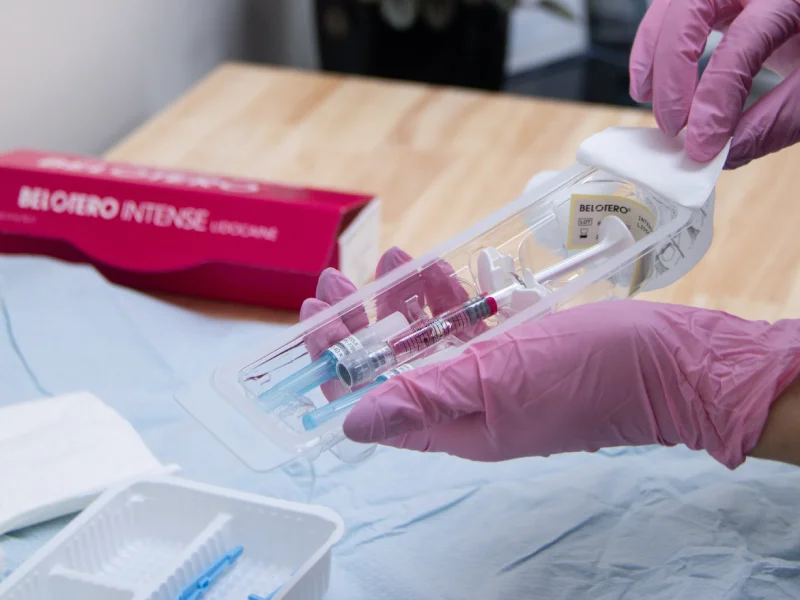
To smooth facial wrinkles and folds, correct facial atrophic scars, restore or enhance the lips or restore facial volume Belotero has risk and benefits Ask your doctor if Belotero is right for you For product information check with your doctor or from product details with the supplier. Click for further details. Contains Sodium Hyaluronate Gel. Merz, Sydney. Distributed by Healthcare Logistics, Auckland.
+ - EPTQ - e.p.t.q. Lidocaine
EPTQ - e.p.t.q. Lidocaine is a sterile, non-pyrogenic, viscoelastic, colourless, transparent gel composed of cross-linked sodium hyaluronate gel of non-animal origin with 0.3% lidocaine hydrochloride in a physiologic phosphate buffer. e.p.t.q. Lidocaine is an injectable gel (also called a dermal filler) used for the correction of nasolabial folds. e.p.t.q. Lidocaine is produced with hyaluronic acid (HA), the HA of the gel is made from a non-animal source. e.p.t.q. Lidocaine should not be used on patients: with known hypersensitivity to any of its components; presenting with a general infection, inflammatory or infectious cutaneous problems; with history of severe multiple allergies or anaphylactic shock; prone to hypertrophic scars/keloids or streptococcal diseases; in patients presenting with porphyria; under 18 years of age; in pregnancy or lactation; others. See full Instructions for Use before prescribing for full safety information, available from www.xytide.co.nz. Copyright© 2024. Xytide Biotech Pty Ltd. Always read the label and follow the instructions. This medical device must be administered by a Healthcare Professional. New Zealand Sponsor Xytide Biotech NZ Pty Ltd (NZBN 9429049668612) C/O Alliott Ltd, Level 2, 142 Broadway, Newmarket, Auckland 1023 NZ. For more information please phone +61 1800 570036